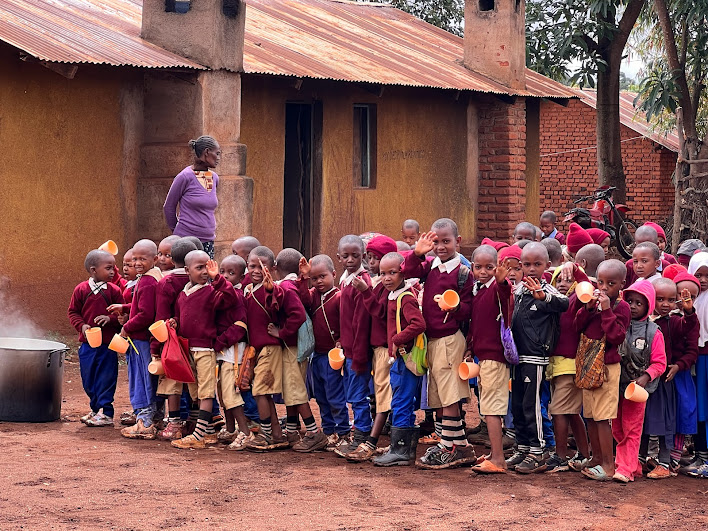
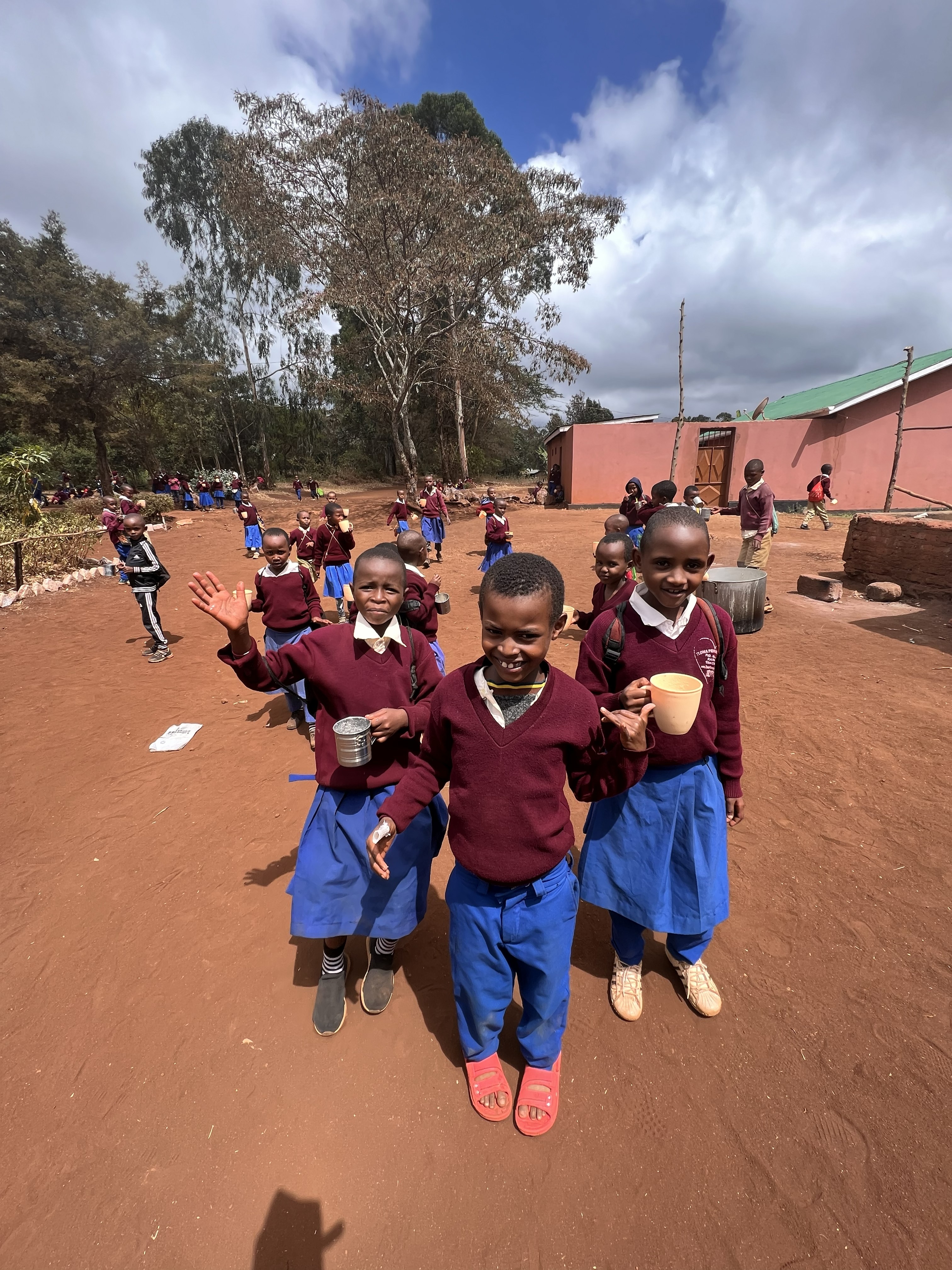
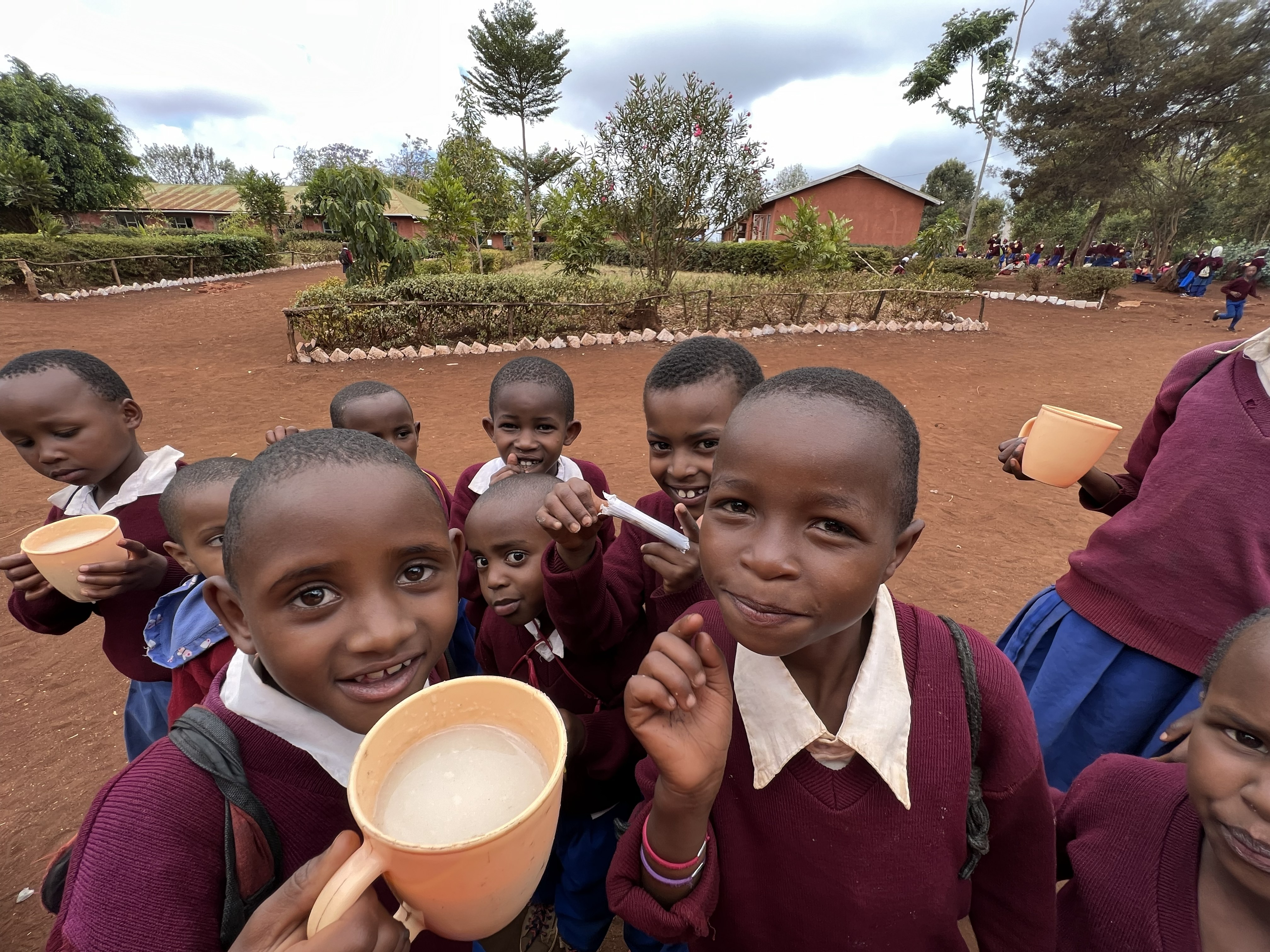
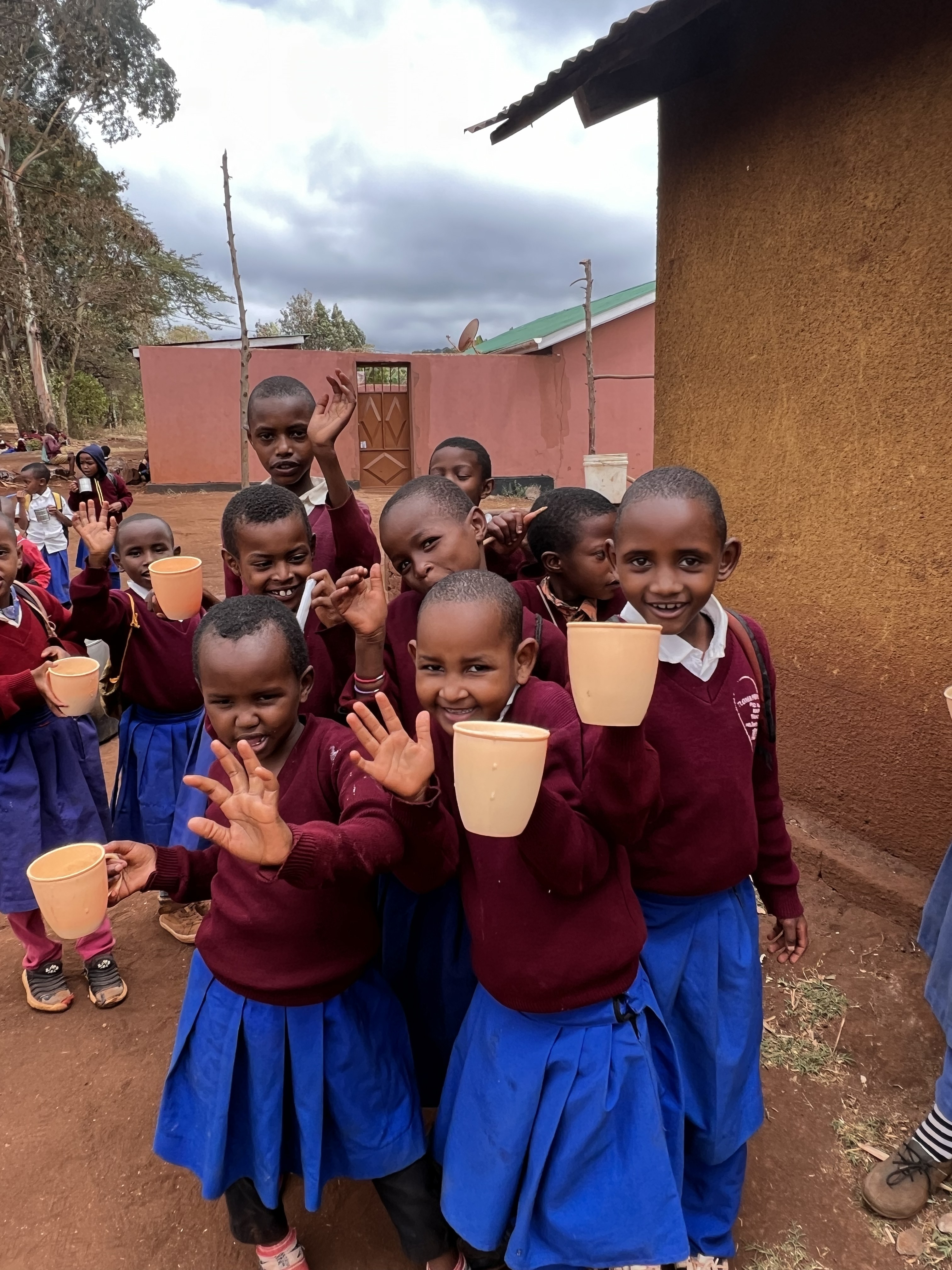

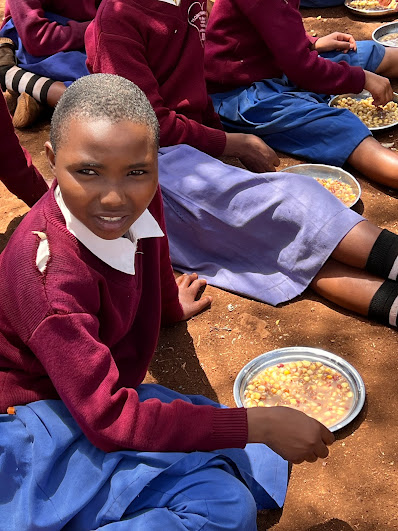


The school day at Tloma Primary shifts around midday. Outside, a fire has been lit beneath a wide metal pot. Inside, a second kitchen is already warm. Between the two, a meal is taking shape. For many of the children sitting in classrooms nearby, it will be the only substantial meal of the day.
What a Meal Means Here
In rural Tanzania, hunger during school hours is not an exception. It is a pattern. Children walk long distances to reach school, often having eaten little or nothing since the evening before. By the middle of the day, concentration falters. The lesson continues; the child falls further behind.
A meal during the school day changes that. Not everything, but enough to matter. A child who has eaten can sit up, focus, and take in what is being taught. That is where it starts.
Two Kitchens, One Goal
Tloma Primary has something worth understanding: two cooking spaces working together. An outdoor fireplace handles the larger pots and the bulk of the cooking. An indoor kitchen manages the rest. Neither alone would be sufficient. Together, they make it possible to feed a meaningful number of children every school day.
That blend of outdoor and indoor, open fire and enclosed stove, is part of what gives Tloma its current capacity. It is also the model that points toward what more schools could do with the right investment in facilities.
At Kilimani Primary, our second partner school, the kitchen facilities are more limited. The hunger is just as present. The gap between what exists and what is needed is wide, and closing it requires both the infrastructure to cook and a reliable supply of food to prepare.
Growing What Feeds Them
The food does not all come from outside. A growing school garden at Tloma produces crops that go directly into the kitchen. Bananas, vegetables, produce that children helped to plant and tend through the school year. There is something significant in that loop: children working the soil, watching things grow, and then eating the results of that work at lunchtime.
Drip irrigation has extended what the garden can produce and when. Community members have been part of learning these methods too, which means the knowledge spreads beyond the school fence and into the households that surround it. Looking further ahead, the goal is for surplus crops to generate income that helps the schools sustain the program themselves.
Where Things Stand
Today, not every child at Tloma or Kilimani receives a meal during the school day. That is the honest picture. Capacity is growing, but it is not yet universal. Both the food supply and the cooking infrastructure need to expand before every child who arrives hungry goes home having eaten.
Two things need to move forward together: a reliable supply of food, and the facilities to prepare it at scale. One without the other does not work. A larger kitchen with nothing to cook helps no one. More food with no way to prepare it reaches no one either. The need is both, and the progress being made shows what becomes possible when both are addressed.
There is a lot still to do. And there is a clear path to doing it.
Support This Project